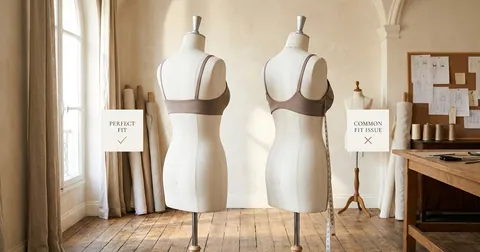
Almost every fit complaint traces back to one of a handful of causes, and almost all of them are fixable with the right size, not a different body.
Accurate, private, and always free- no signup, and nothing you enter is stored.
Start With Your Size
Before troubleshooting a specific problem, confirm your size is current. Many fit issues disappear once band and cup are actually correct. Use the Main Bra Calculator if it’s been a while since you last measured.
Common Problems, Quick Links
Browse specific issues below: each guide explains why it happens and the exact fix, without assuming anything is wrong with your body.
When It’s Not About Size
Sometimes the size is right but the style is wrong for your shape. See our Breast shape identifier if problems persist even after resizing.
Almost Everything Traces to Band, Cup, or Strap
Nearly every fit complaint falls into one of three categories: the band isn’t gripping correctly, the cup doesn’t match your volume, or the straps are compensating for one of the first two. Diagnosing which category you’re in solves most problems faster than guessing at a fix.
Start Here: A Quick Diagnostic
Check the band first: does it ride up or feel loose? That’s a band issue.
If the band feels secure but the cup gapes, wrinkles, or spills, that’s a cup issue. If both band and cup feel right but straps still dig in or slip, that’s usually a strap-adjustment or shape-and-style issue, not a size issue at all.
Every Specific Problem, Covered
Below are dedicated guides for the most common specific complaints (from band riding up to underwire poking to cup gaping) each with the likely cause and the exact fix, rather than only “try a different size.”
How to Use This Section
Each fit problem below covers the likely cause, a quick self-check, and the actual fix. Most fit issues trace back to either the band or the cup being the wrong size, not a flaw in the bra itself or something to just live with.
Band Problems vs. Cup Problems
Band problems (riding up, digging in, feeling loose) almost always mean the band number needs adjusting. Cup problems (gaping, spilling, wrinkling) point to the cup letter.
Many people fix the wrong half of their size first because the symptoms can feel similar. Checking which category your specific issue falls into first saves a round of trial and error.
When It’s Not a Sizing Issue
Not every discomfort is a size problem, sometimes it’s the wrong style for your shape or activity level. If you’ve correctly sized using the Main Bra Calculator and a specific problem persists, check Your shape or the specific use case (sports, nursing, etc.) for a construction mismatch instead.
How to Diagnose Your Specific Problem
Start with the band: if it rides up, feels loose, or needs constant readjusting, that’s usually the first thing to fix, since a poorly fitting band undermines everything else. Once the band is confirmed correct, look at cup symptoms (gaping, spillage, wrinkling) to diagnose cup-specific issues separately.
When It’s a Style Issue, Not a Size Issue
Not every discomfort means the size is wrong. A correctly sized bra in the wrong style for your shape (plunge instead of full-coverage, for example) can still feel off. If you’ve confirmed band and cup fit correctly but something still feels wrong, the fix may be switching styles rather than sizes.
How to Use This Hub If You Have Multiple Issues at Once
It’s common to have more than one fit problem simultaneously (a band that rides up AND cups that gape, for example) and they often share the same root cause (usually a band that’s too loose). Start with whichever specific problem page matches your most noticeable symptom, since fixing the band issue frequently resolves a cup issue that was really just a side effect of it.
When You Need a New Size Instead of a New Style
If you’ve tried the specific fixes on multiple problem pages and nothing improves, that’s a signal to re-measure from scratch rather than keep troubleshooting individual symptoms.